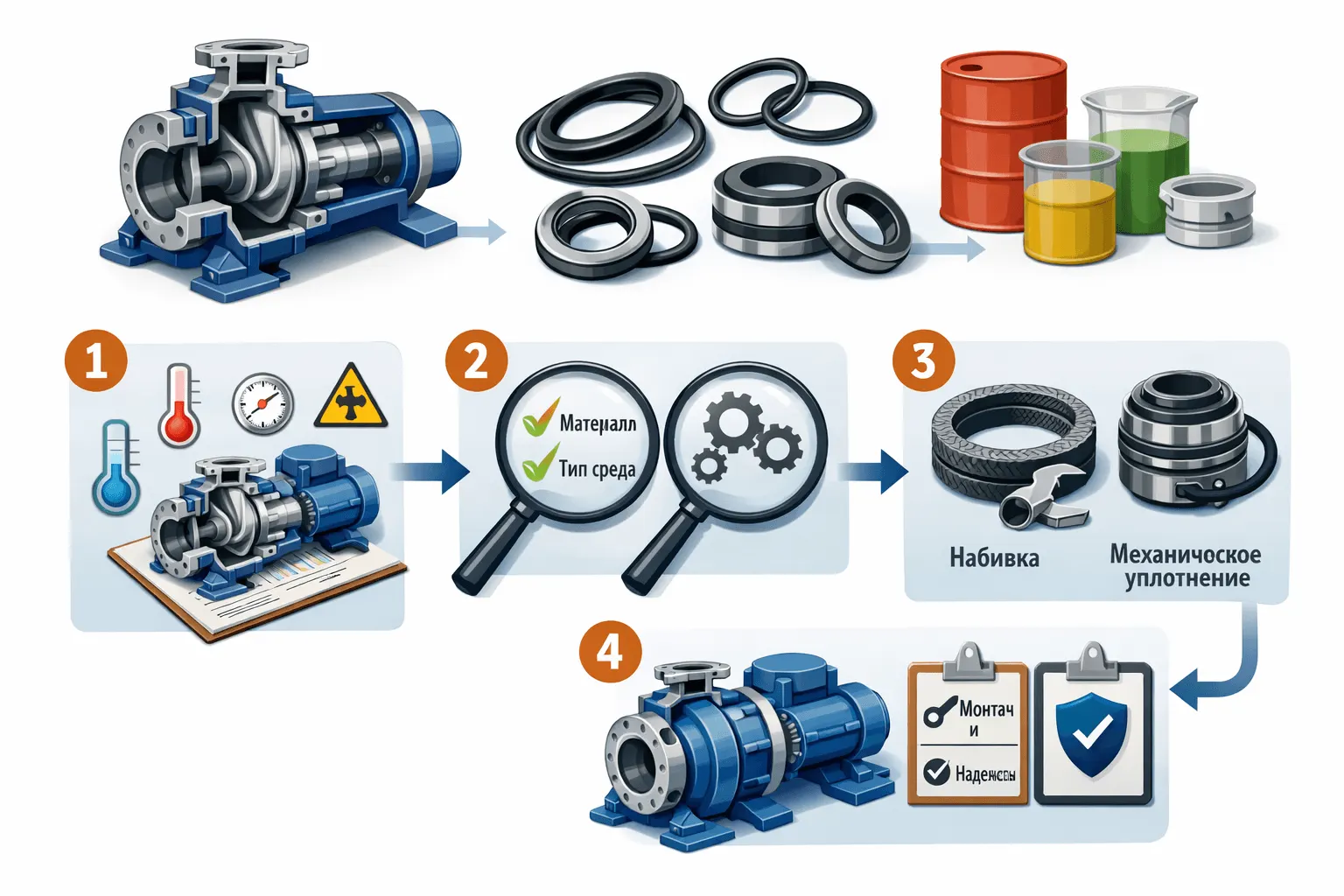
Choosing the right pump seal is key to longevity and uninterrupted operation. Wrong seals lead to leaks, downtime, and costly repairs.
Step one — identify the pumped medium. EPDM for water and weak solutions. NBR for oils and petroleum. Viton or PTFE for aggressive chemicals. Silicone selected for product contact for food products.
Step two — determine working temperature. NBR works to +120°C, EPDM to +150°C, Viton to +250°C. For fluctuating temperatures, choose material with margin.
Step three — consider system pressure. For high pressure (100+ bar), use polyurethane or reinforced PTFE seals. Standard pressure works with regular rubber rings.
Step four — select seal type. O-ring is the most universal. Cuff for rods and pistons. Mechanical seal for rotating shafts.
Step five — determine dimensions. Measure the seat with calipers: inner diameter, outer diameter, and cross-section. If you have the old seal — bring it as a sample.
At REZINA.UZ we manufacture seals for all pump types: centrifugal, gear, screw, diaphragm. By drawing, sample, or part number. Minimum order from 100 pcs.
The pump sets shaft, speed, medium and stuffing-box temperature — not whatever ring is on the shelf. Hot condensate and cold water need different compounds.
A mechanical seal and an oil seal are different assemblies. Secondary O-rings follow sleeve diameters, not the lid photo.
Solids kill the lip faster than the mix. If the water carries sand, fix shaft protection and flush, then rubber.
Send pump type, shaft diameter, medium, temperature and speed. Standard items: 3–5 business days after approval.