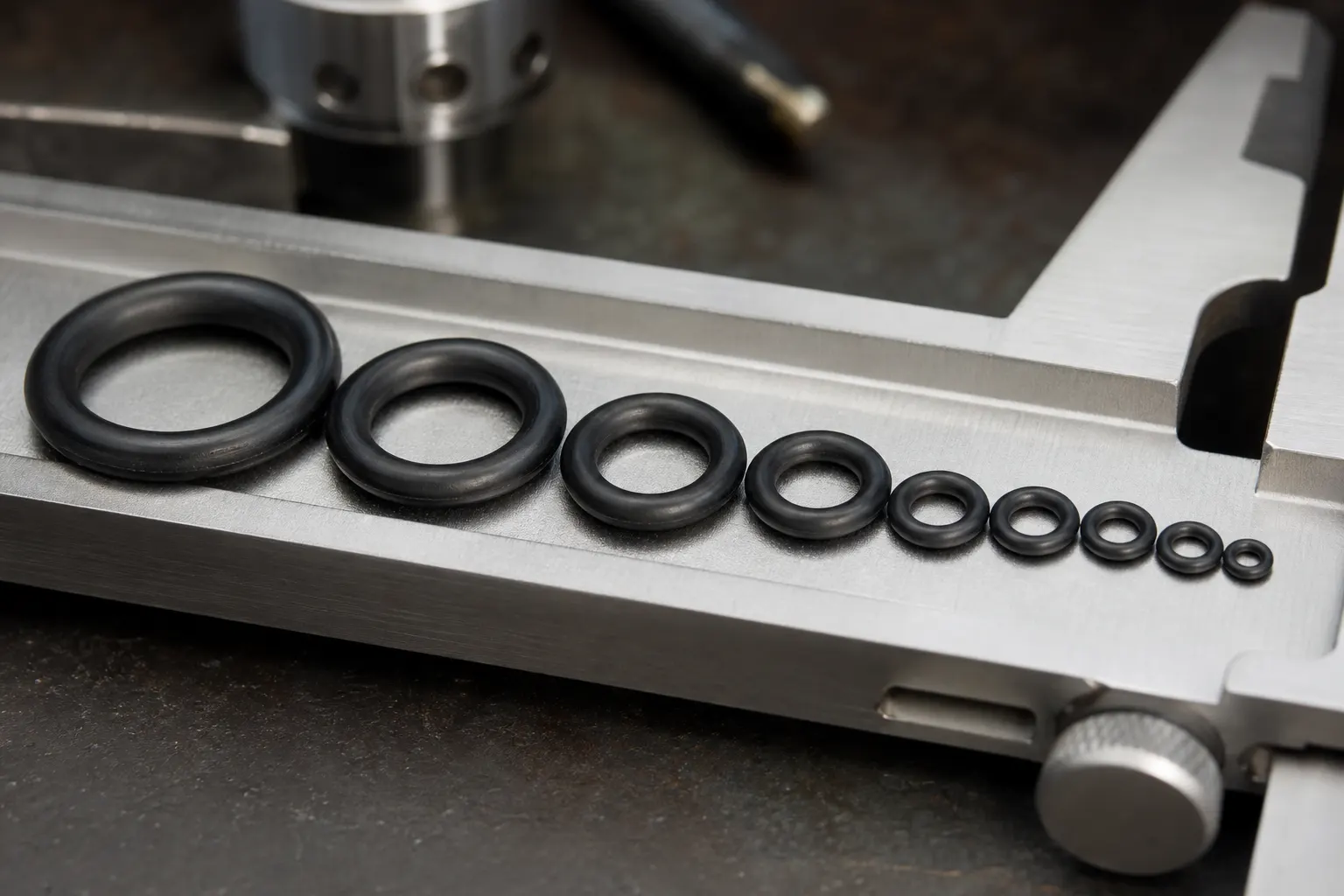
Wrong O-ring means leaks or early wear. Lock four parameters: dimensions, material, hardness, duty.
Dimensions: inner diameter and cross-section from sample or groove drawing.
Material: oil/fuel → NBR; water/steam → EPDM; chemicals/heat → Viton; food/heat without oil → silicone.
Shore A: typically 70±5. Softer seals uneven surfaces; harder handles higher pressure.
Non-standard sizes — we mold to drawing or sample.
Send a photo of the worn ring and operating conditions — we will match an analog.
Section and ID come from the groove standard or a housing measure, not from a ring in a drawer. Squeeze outside range leaks or extrudes.
Dynamic rods need lip and hardness that static flanges do not. One section for both is a compromise to state openly.
Pick the compound after the groove, or perfect geometry dies in the wrong medium.
Ovality after removal means measure at several points, not an eyeball average.