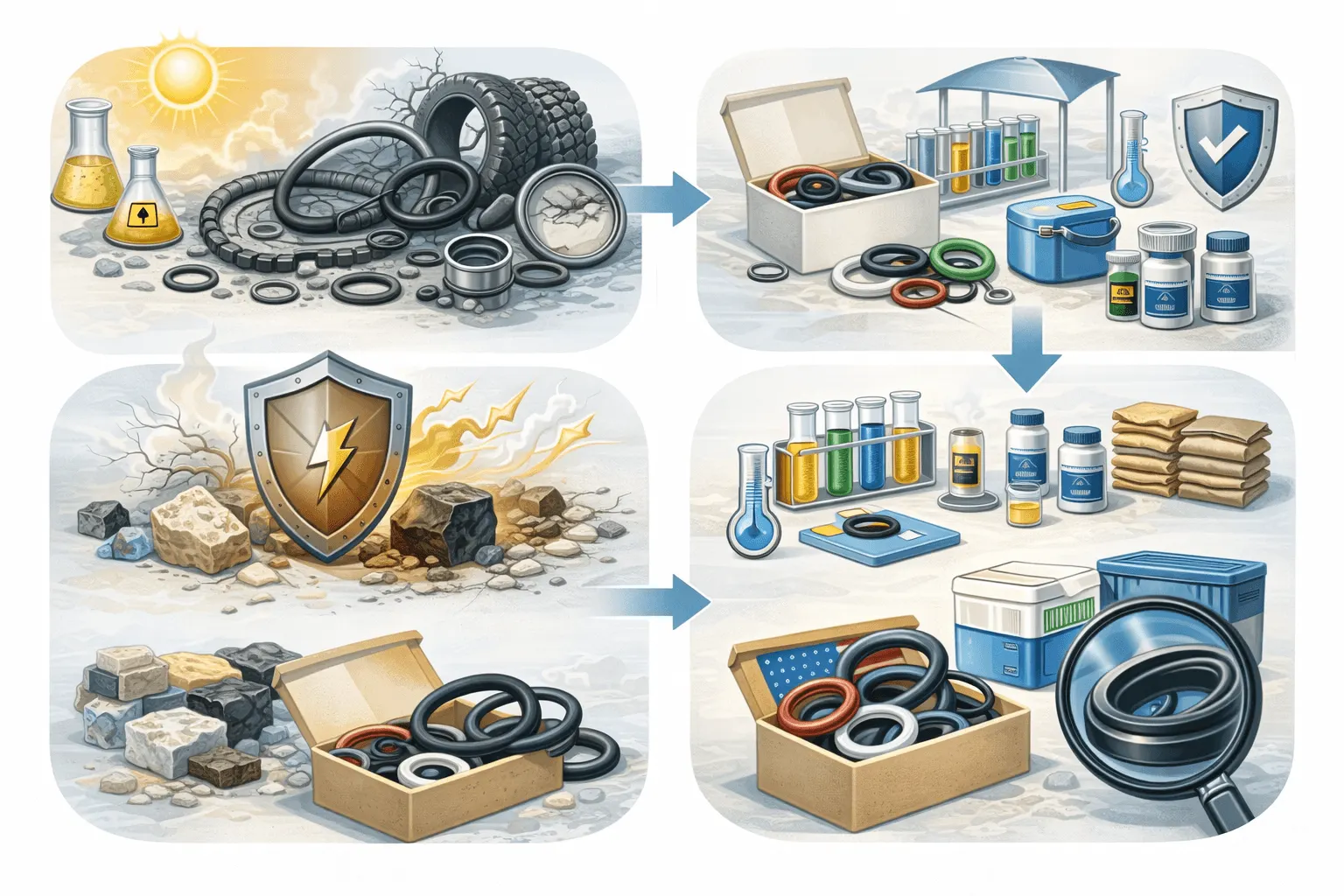
Rubber is an organic polymer that inevitably ages over time. But aging speed depends on storage and operating conditions. Knowing the causes, you can extend service life significantly.
Ozone aging is rubber's main enemy outdoors. Ozone breaks double bonds in the polymer, causing characteristic surface cracks. EPDM and silicone are most ozone-resistant; NBR least.
UV radiation destroys rubber structure, making it brittle. For outdoor use, choose EPDM or add UV stabilizers. Black color (carbon black) increases UV resistance.
Thermal aging accelerates oxidation. Every +10°C roughly halves service life. Don't use NBR above +100°C continuously — switch to Viton or silicone.
Chemical exposure: oils destroy EPDM, water and alkalis damage NBR. Wrong material choice is the most common cause of premature failure.
Rubber storage rules: dark cool room (+15-25°C), 50-70% humidity, away from electric motors (ozone), no oil or solvent contact, in original packaging.
At REZINA.UZ we select materials considering specific operating conditions to maximize service life and avoid unexpected failures.
Ageing is oxidation and loss of elasticity, sped up by heat, ozone and UV. Outdoors EPDM usually outlasts nitrile; in oil the reverse.
Over-compression and compression set flatten a ring so it no longer springs. That is not always a bad mix — sometimes squeeze or temperature is too high.
Copper and some plasticizers from neighbouring parts cause tack and cracks. Inspect the whole joint.
Life improves with the right grade, dark storage, damage-free fitment and staying inside the temperature window.