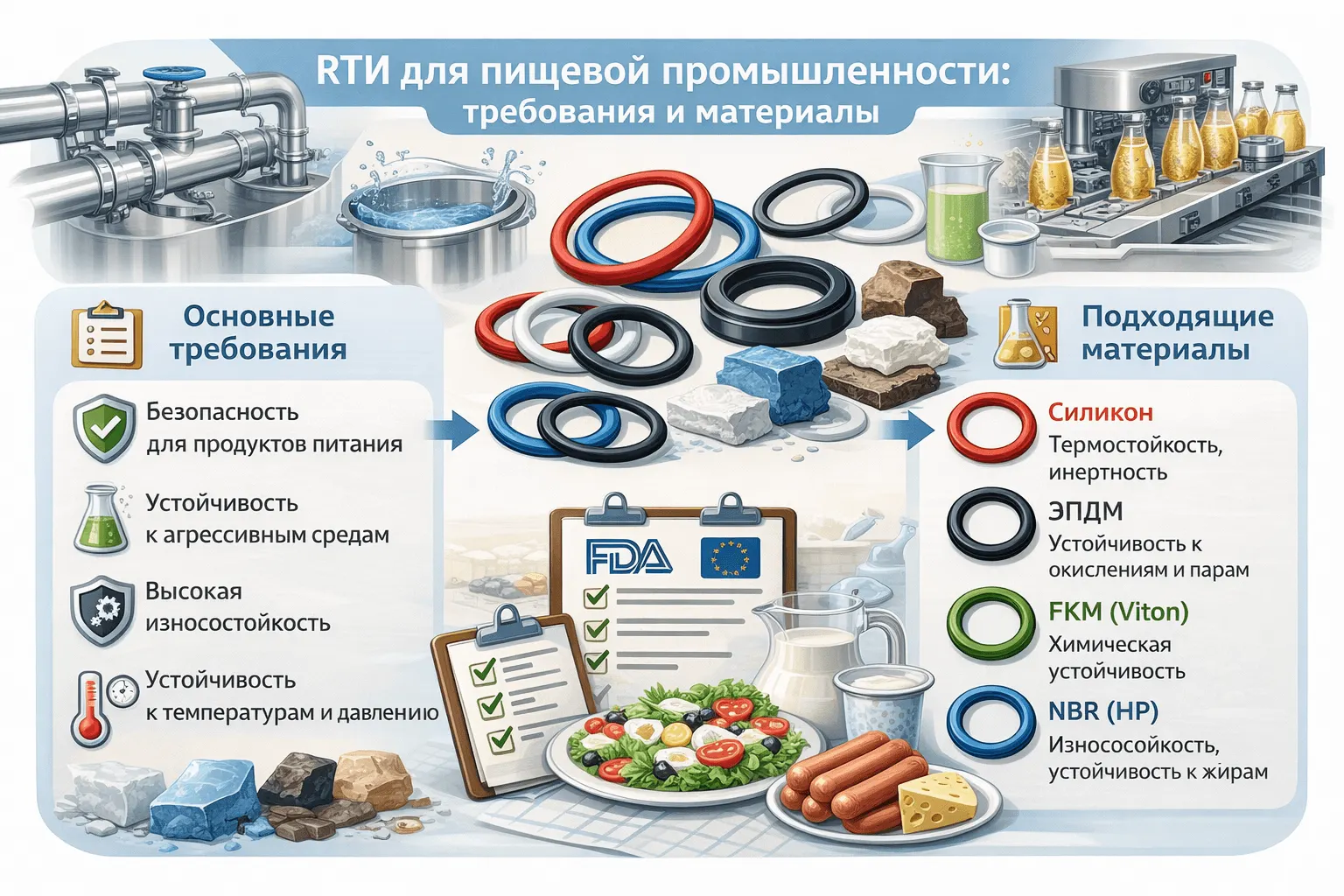
Food production rubber products face special requirements: food contact safety, odorless and tasteless, resistance to frequent cleaning and sterilization cycles.
Main food-grade materials: Silicone (MVQ) — safe for direct food contact, withstands steam sterilization to +200°C. The grade is selected for product contact.
Food-grade EPDM is used for heat-exchanger gaskets and valve seals. CIP cleaning resistant with alkalis and acids. Cheaper than silicone with comparable safety.
PTFE — absolute chemical inertness. Used where food contact must be completely neutral: dosing systems, reactors, mixers.
Typical food production products: plate heat exchanger gaskets (Alfa Laval, GEA, APV), dairy and beer valve seals, rings and gaskets for covers, dosing equipment and flanges.
When choosing a supplier, ensure they can provide material certificates. At REZINA.UZ we only work with certified raw materials and select the grade for product contact and do not claim a third-party certificate.
Food-grade rubber costs 20-40% more than standard, but savings on downtime and product rejection easily offset the difference.
Food duty is an agreed compound and batch papers, not a silicone colour. “Food grade” without documents fails an audit.
CIP, steam and alkali change the choice: EPDM and silicone behave differently. Oily filler zones often stay on NBR.
Hatch geometry decides cord versus moulded gasket. Eye-cut sheet on an uneven hatch leaks regardless of grade.
Name the product, wash temperature and whether certificates are required. After compound approval, typically 3–5 business days.