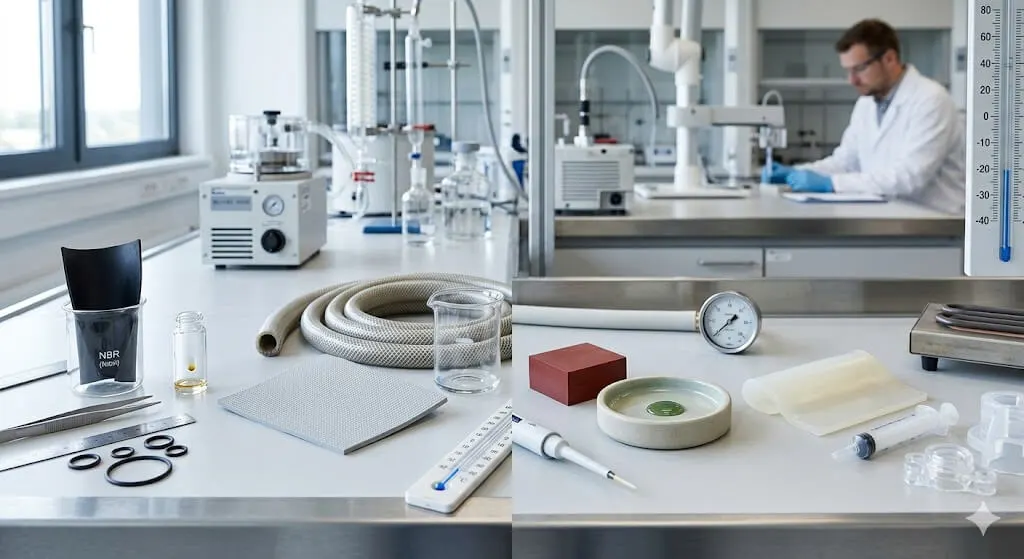
Many rubber grades are used in industry, each with unique properties. Choosing the right material ensures durability and reliability.
NBR (nitrile rubber) — the most common material for seals. Resistant to oils, fuels and hydraulic fluids. Operating temperature from -30°C to +120°C. Used in hydraulics, pumps, compressors.
EPDM (ethylene-propylene rubber) — excellent resistance to water, steam, alkalis and acids. Operating temperature from -40°C to +150°C. Ideal for water supply, heating and food industry.
Viton (FKM) — premium material with exceptional chemical resistance. Operating temperature up to +250°C. Used in petrochemistry, aviation, automotive.
Silicone rubber — non-toxic, heat-resistant, suitable for food and medical industries. Temperature range from -60°C to +250°C.
Polyurethane — high wear resistance and mechanical strength. Ideal for rollers, dampers, bushings under load.
When choosing a material, consider: working environment, temperature, pressure and mechanical loads. REZINA.UZ specialists will help select the optimal material.
In practice the grade is chosen from three fields: medium, temperature and motion. The same NBR ring in cold oil and in hot additized oil carries different swell and hardness risks.
FKM/Viton is justified when nitrile cannot hold chemistry or heat. Using it “just in case” on water and air is usually cost without benefit. Silicone covers food and wide temperature windows, not mineral oil.
Polyurethane here is for bushings, rollers and abrasion — not a spool-valve O-ring substitute. Mixed assemblies are split by circuit.
A sketch, the medium and a temperature range are enough to start. Standard production after approval is 3–5 business days.